













Product Description
Full-Size Trail Riding Without Carburetor Tuning
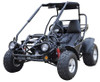
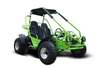
The TrailMaster 200E XRS keeps the frame, suspension, steering, brakes, automatic CVT transmission and reverse system of the carbureted 200 XRS, but replaces the carburetor with a ROJO electronic fuel-injection system.
The ROJO system uses an ECU, throttle body, fuel injector, electric fuel pump, oxygen sensor and supporting sensors to manage fuel delivery electronically. Its self-learning program adjusts to the individual kart and operating conditions, while an optional Bluetooth transceiver allows supported diagnostics and tuning from a compatible Android device.
Fuel System
ROJO electronic fuel injection
Engine Platform
200-class air-cooled GY6
Transmission
Automatic CVT with reverse
Diagnostics
Bluetooth capability with Android
Brakes
Front and rear hydraulic discs
Chassis
Same full-size platform as the 200 XRS
Best for: Riders who want easy starting, automatic fuel adjustment and less hands-on mechanical tuning.
Choose the carbureted 200 XRS instead if: You enjoy working on engines, want lower fuel-system parts costs, plan to install performance upgrades or prefer the broadest technical-support base.
Want the 200 XRS Experience Without Carburetor Adjustments?
The 200E XRS keeps the proven full-size buggy and changes the ownership experience with self-learning electronic fuel injection.
Ask Which Fuel System Fits YouScott's Expert Opinion
"As a master mechanic, I would personally choose the carbureted 200 XRS. I have the skills to diagnose it, tune it and modify it, and carburetor parts usually cost less.
If I did not have those mechanical skills, or if I simply wanted to turn the key and ride, I would choose the 200E XRS. The EFI system handles fuel management electronically and removes much of the routine tuning that comes with carburetor ownership.
The carbureted model rewards mechanical involvement. The EFI model rewards the owner who values convenience."
Scott Pannell, GoKartMasters

Why the 200E XRS Exists
The 200E XRS was not created because the carbureted 200 XRS stopped being a good machine. It was created for owners who prefer modern electronic engine management over traditional mechanical tuning.
Some riders enjoy cleaning jets, adjusting mixtures and learning how a carburetor works. Others want the engine computer to monitor conditions and control fuel delivery automatically. The 200E XRS serves that second group without changing the proven full-size buggy underneath.
What Is Different From the Carbureted 200 XRS?
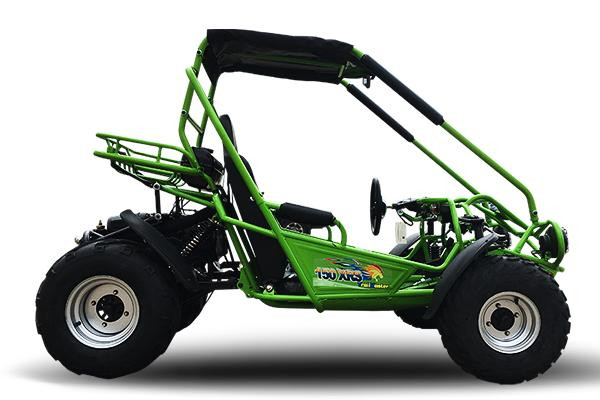
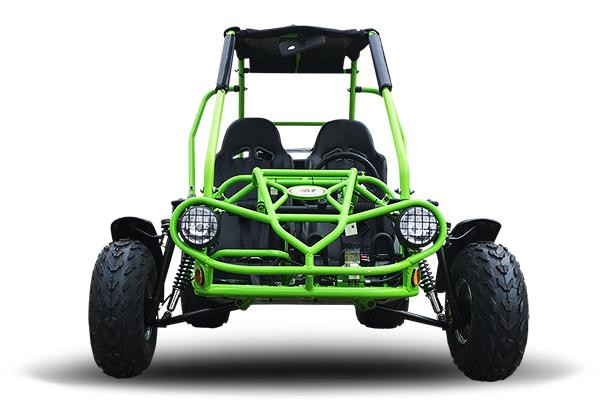
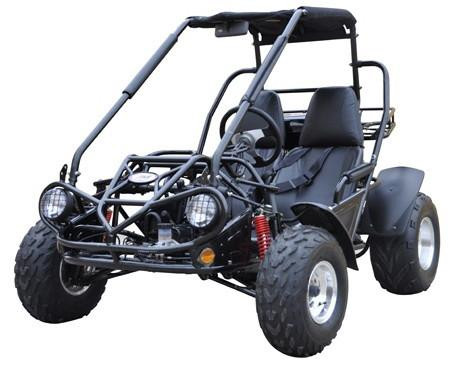
Nearly everything outside the fuel-management system is the same. Both models use the same frame, suspension, steering, automatic CVT transmission, reverse system, brakes, cockpit, utility rack and overall riding platform.
The Proven 200 Platform
- Full-size two-seat frame
- Air-cooled GY6-style engine platform
- Automatic CVT transmission
- Forward, neutral and reverse
- Rack-and-pinion steering
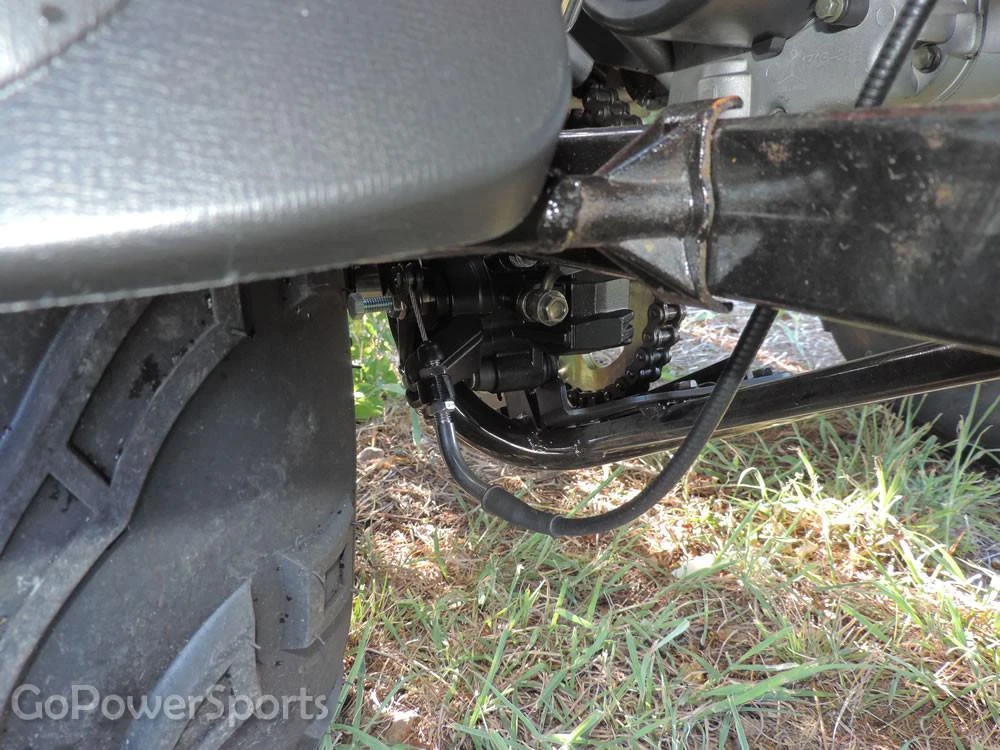
- Front and rear hydraulic disc brakes
- Double A-arm front suspension
- Rear swingarm suspension
- Adjustable driver's seat and steering wheel
- Rear utility rack and trailer hitch
ROJO EFI Components
- Electronic control unit, or ECU
- Throttle body and throttle-position sensor
- Electronic fuel injector
- Pressurized electric fuel pump
- Oxygen sensor in the exhaust
- Crankshaft-position sensor
- Engine-temperature sensor
- EFI wiring harness and fault indicators
- Communication socket for diagnostics
- Optional Bluetooth transceiver
How the ROJO EFI System Works
A carburetor uses fixed mechanical passages and jets to meter fuel. The ROJO system uses sensors, a computer and a fuel injector to decide how much fuel the engine needs and when to deliver it.
1. Sensors Measure
The system monitors throttle position, crankshaft position, exhaust oxygen and engine temperature.
2. The ECU Decides
The ECU processes the signals and calculates fuel and ignition commands.
3. The Injector Delivers
The fuel pump supplies pressure, and the injector meters fuel into the intake.
| Component | Function |
|---|---|
| ECU | Receives sensor signals, calculates control strategies and commands the fuel and ignition systems. |
| Throttle body | Controls intake airflow. |
| Throttle-position sensor | Reports throttle opening to the ECU. |
| Fuel pump | Supplies pressurized fuel to the injector. |
| Injector | Controls the timing and amount of fuel entering the intake. |
| Oxygen sensor | Measures oxygen in the exhaust so the system can correct the fuel mixture. |
| Crankshaft-position sensor | Provides position information for injection and ignition timing. |
| Temperature sensor | Helps adjust fueling during starting and warm-up. |
| Fault indicator | Alerts the owner when the EFI system detects certain faults. |
ROJO Self-Learning Fuel Control
The ROJO system includes self-learning functions that help calibrate fueling to the individual engine and operating conditions. Rather than relying on one fixed mechanical setting, the ECU uses sensor feedback to refine fuel delivery while the engine runs.
The ROJO manual also describes a fast self-learning calibration routine that moves through several throttle-opening points. This is a setup and troubleshooting procedure and should be performed only according to the current ROJO instructions.
Self-learning does not mean maintenance-free. Engine condition, battery health, fuel quality, connectors, sensors and fuel pressure still matter.
Bluetooth Diagnostics and Tuning
The ROJO EFI system connects to a communication device via a compatible Bluetooth transceiver. The supported setup can display engine information and access compatible diagnostic, tuning and calibration functions on an android device.
What Bluetooth Can Help With
- Reading supported engine-operating data
- Viewing EFI system information
- Supporting diagnostic work
- Accessing compatible tuning functions
- Assisting with calibration and system checks
Compatibility Limitation
- A compatible Bluetooth transceiver is required.
- The tuning software works with Android devices.
- Apple iPhone and iPad devices are not supported for tuning.
- Available features can depend on software and transceiver version.
EFI Advantages and Ownership Tradeoffs
Why Owners Choose EFI
- No carburetor jets or mixture screws to tune.
- Electronic fuel adjustment for changing conditions.
- Self-learning calibration built into the ROJO system.
- Convenient cold-start fuel management.
- Bluetooth-compatible diagnostics and tuning.
- A good fit for owners without advanced mechanical skills.
What Buyers Should Know
- EFI components generally cost more than carburetor parts.
- There are more sensors, connectors and electrical components to diagnose.
- Bluetooth tuning requires an Android device.
- No established performance-parts selection is currently available.
- Technical support is less extensive than for the carbureted platform.
- Some problems require electronic testing rather than mechanical adjustment.
GoKartMasters Field Notes
After selling and supporting both versions of the 200 platform, we have found that the biggest difference is not how the buggy drives. The difference is what the owner is expected to understand when service is needed.
- Owners without carburetor experience often prefer EFI. The system handles fuel adjustment electronically and removes several routine carburetor tasks.
- Battery condition matters. A battery can show approximately 12 volts and still drop too far under load to operate the starter, pump and EFI electronics correctly.
- Electrical connections must stay clean and secure. Loose plugs, weak grounds, pinched wires and low voltage can imitate larger EFI failures.
- Fresh fuel still matters. EFI avoids carburetor varnish, but contaminated or stale fuel can still affect the pump and injector.
- EFI changes maintenance; it does not eliminate it. Owners trade carburetor cleaning and jetting for battery, connector, sensor, fuel-pressure and electronic diagnosis.
- GoKartMasters stocks the parts. We carry the injector, fuel pump, oxygen sensor, regulator/rectifier, wiring components and other EFI parts for this platform.
What the 200E XRS Is Like to Drive
Because the chassis, transmission, steering, brakes and suspension are shared with the carbureted 200 XRS, the two versions feel nearly identical from the driver's seat. The primary difference appears when the engine is started and managed.
- Turn the key and allow the fuel pump to prime before starting.
- The automatic CVT manages drive ratios without a clutch pedal.
- Reverse is built into the transmission.
- The full-size cockpit provides more room than Mini and Mid-size models.
- Front and rear hydraulic disc brakes provide braking at all four corners.
- The adjustable seat and steering wheel help fit different riders.
Who Should Buy the 200E XRS?
Choose EFI If You...
- Do not have advanced carburetor-tuning skills.
- Want electronic fuel management.
- Prefer newer engine-control technology.
- Want Bluetooth-supported diagnostics.
- Ride in changing temperatures or elevations.
- Do not plan to install performance modifications.
Choose the Carbureted 200 XRS If You...
- Enjoy tuning and repairing mechanical fuel systems.
- Want lower fuel-system parts costs.
- Plan to modify the engine.
- Want the largest repair knowledge base.
- Prefer ordinary hand-tool diagnosis.
- Do not use an Android device for EFI tuning.
TrailMaster 200E XRS vs. 200 XRS
| Ownership Question | 200E XRS EFI | 200 XRS Carbureted |
|---|---|---|
| Fuel delivery | ROJO electronic fuel injection | Traditional mechanical carburetor |
| Routine tuning | Electronic and self-learning | Manual cleaning, jetting and adjustment |
| Diagnostic interface | Bluetooth capability with Android | Visual and mechanical testing |
| Elevation and weather | Electronic compensation | May require tuning for major changes |
| Fuel-system parts cost | Generally higher | Generally lower |
| Performance aftermarket | No established selection currently available | Broad performance and tuning options |
| Technical-support depth | Less extensive because the system is newer | Broad GY6 knowledge and support |
| Best owner profile | Wants convenience and electronic control | Wants simplicity and hands-on serviceability |
| Scott's personal choice | Would choose it without advanced mechanical skills | Preferred because he is a master mechanic |
Rider Fit
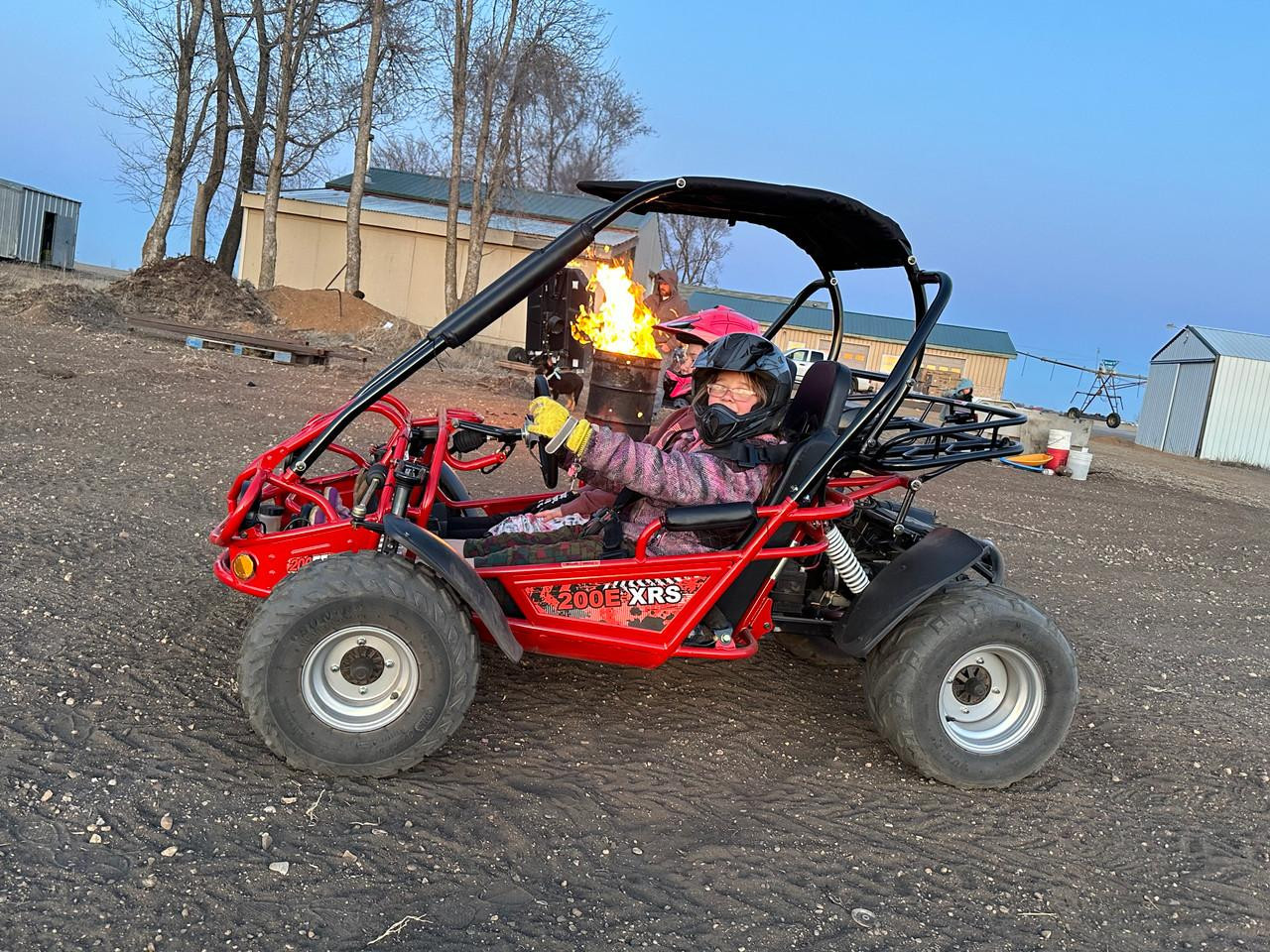
The 200E XRS uses the same full-size cockpit as the carbureted 200 XRS. The driver should sit fully against the seat, steer comfortably and press the brake pedal through its full travel without stretching.
Seat-adjustment range: The driver seat adjusts on sliding rails and gives about 6" of movability. Most kids around 5 feet can start driving this kart if they have the skills. Over about 6'2", the cockpit will get a bit tight for comfort, and the rider's shins may hit the roll bar around the dash.
GoKartMasters Verified Specifications
| Engine type | Air-cooled, four-stroke, single-cylinder GY6-style engine with ROJO EFI |
|---|---|
| Displacement | 149.6cc |
| Fuel system | ROJO electronic fuel injection |
| EFI controls | ECU, throttle body, injector, oxygen sensor, fuel pump and supporting sensors |
| Diagnostics | Communication socket; optional Bluetooth transceiver with Android compatibility |
| Transmission | Automatic CVT with forward, neutral and reverse |
| Starting system | Electric start |
| Drive system | Chain drive to solid rear axle |
| Front suspension | Double A-arm |
| Rear suspension | Swingarm |
| Brakes | Front and rear hydraulic disc brakes |
| Wheelbase | 59 inches |
| Overall dimensions | 85 x 53.1 x 57.5 inches |
| Ground clearance | 6.7 inches |
| Front tires | 20 x 7-8 |
| Rear tires | 22 x 10-10 |
| Fuel capacity | Approximately 2.25 gallons |
| Maximum load | 500 pounds |
| Published top speed | 35 mph |
| Harness configuration | 5 point harnesses |
Freight Delivery and Assembly
The 200E XRS ships in a factory crate by freight carrier and requires final assembly, setup, fluid checks and inspection before use.
- Inspect and photograph every side of the crate before signing.
- Write visible freight damage on the delivery receipt.
- Keep the crate and packaging until assembly is complete.
- Connect the battery correctly and verify secure electrical grounds.
- Inspect every EFI connector and confirm the harness is not pinched.
- Add or verify all required fluids before starting.
- Check brakes, steering, wheel hardware, chain and shift adjustment.
- Allow the fuel pump to prime before the first starting attempt.
Frequently Asked Questions
What does the E in 200E XRS mean?
It identifies the EFI-equipped version of the 200 XRS platform. This model uses ROJO electronic fuel injection instead of a carburetor.
Is the 200E XRS a completely different kart?
No. The chassis, transmission, reverse, suspension, brakes, steering and ride are the same as the 200 XRS. The main change is the fuel-management system.
Does the EFI system tune itself?
The ROJO system uses sensor feedback and self-learning functions to refine fuel control. It still requires correct setup, healthy electrical components and proper maintenance.
Can I tune it with an iPhone?
No. The compatible Bluetooth tuning setup currently requires an Android device.
Does the Bluetooth transceiver come with the kart?
The bluetooth device is sold separately. GoKartMasters stocks compatible EFI diagnostic equipment.
Is EFI maintenance-free?
No. EFI removes carburetor cleaning and jetting, but it depends on battery condition, fuel pressure, connectors, wiring, sensors, injector condition and clean fuel.
Are EFI parts available?
Yes. GoKartMasters stocks injectors, fuel pumps, oxygen sensors, wiring components and other ROJO-system parts.
Why does Scott prefer the carbureted model?
Scott is a master mechanic who values inexpensive parts, mechanical diagnosis and performance modifications. Without those skills, he would prefer EFI for its convenience.
Will EFI cost more to maintain?
Routine ownership may require less tuning, but repairs can cost slightly more because EFI components are more expensive.
200E XRS Owner Resources
Why Buy the 200E XRS from GoKartMasters?
- Approximately 20 years of TrailMaster experience
- More than 5,000 TrailMaster machines and mini bikes sold
- ROJO EFI parts stocked in-house
- Model-specific 200E XRS parts catalog
- Honest guidance about EFI and carburetor tradeoffs
- Owner-education resources and support after delivery
Would Scott Buy the 200E XRS?
Scott personally prefers the carbureted 200 XRS because he has the experience and tools to diagnose, tune and modify it.
For an owner without those skills, he would choose the 200E XRS for the easier fuel management and reduced need for manual carburetor work.
EFI Convenience or Carburetor Simplicity?
Tell us how mechanically involved you want to be, where you ride and whether you use an Android device. We will help you choose the right version.
Ask the GoKartMasters Sales Team Compare the Carbureted 200 XRSDealer observations reflect GoKartMasters experience and do not replace the current owner's manual or ROJO EFI instructions.
Product Videos
Videos Hide Videos Show Videos
-

TrailMaster 200 XRS Go Kart Overview | Features, Specs & Walkaround
Title: TrailMaster 200 XRS Go Kart Overview | Features, Specs ...
-
Assembling The Trailmaster 200 Go Kart: A Step-by-step Assembly Guide
Get our favorite synthetic 10W30 for all Trailmaster go karts ...
-
Trailmaster Go Karts in Action 2024
Get our favorite synthetic 10W30 for all Trailmaster go karts ...
-
Unleash The Adventure: Trailmaster 200 XRS Go Kart | A Visual Review
Get our favorite synthetic 10W30 for all Trailmaster go karts ...
-
How to Start a Trailmaster 200 Go Kart | First Start
Get our favorite synthetic 10W30 for all Trailmaster go karts ...


Custom Field
Product Reviews
2 Reviews Hide Reviews Show Reviews
-
200 XRS EFI
When I started looking for a go kart for my grandkids, there were plenty of options but when I looked into the company selling them lots of bad reviews. When spending a large sum of money on the internet you want to be sure you went with the right company. Go Kart master was the right company to deal with. The kart was shipped fast and was received in 12 days. very happy with my 200 XRS and gokartmasters.com
-
So far so good.
A little back story. I’m an avid motorcyclist who’s unable to ride after having a stroke 9 years ago. I tried riding a 4 wheeler back in September but didn’t feel safe due to my lack of balance. I wanted to still enjoy a motorsport,so I thought I’d give this go kart a try. I’ve driven it for about 7 hours and so far it fits the bill. At this point I would give it a 5 star rating. The only thing missing is the flag and I haven’t been able to find one locally. Thanks for your support. By the way, the assembly video was a game changer. Kirby